Tuesday, November 29, 2011

Global Killer No.1 - Road Accident - Part II

In my last article on Global Killer No.1 - Road Accident - Part I, i came up with the story of two years old Chinese Kid was hit by a van. The driver confessed that he was talking on the phone while he hit that little girl. Thus, the main cause of the accident is distraction from usage of phone by the van's driver itself. As we know talking on the phone while driving is illegal and might cause an accident. It’s not safe, yet people still do it.

"Preparing your umbrella before the rain falling" , is like the infamous an oldage Malay saying which means prevention is better than cure . Why the term is so important especially on the road safety? Let me give you the details.

I don't know to put it into words but I try but giving you an example. Let say, Mr X wants to arrive as soon as possible to his office because he has a significant meeting to attend. Thus, he drive his car fast on the road while talking on the phone to tell his boss to wait for him. Unluckily, he got into an accident. Not only he can't attend the meeting but also he lost his both legs and consequently, he can't work anymore. So in this example, where the term prevention come? Prevention is drive safety. Cure is to treat his injury and lost of job (got into an accident). So to put into long statment. Drive safety is better than losing job or got into an injury. You got it?

So, in order to prevent the accident, drive safety is very important. Those who use mobiles while driving are four times more likely to be involved in an accident. There are several studies on road safety says that using a hands free kit while driving is not any safer than a hand held mobile. Using a hands free kit with the phone is not illegal, but it will stop us from concentrating for a short time when we use our mobile phone and this puts other people using the road at risk.


Ways to prevention...

  • Turn off mobile phone or put it on the 'silent' or 'meeting' option setting before starting journey.
  • Use the voice mail on the phone so people can leave messages for us while we are travelling.
  • Stop Regularly on our journey so we can check for messages and return any calls.
  • Make sure the place we stop is a legal and safe place to park. It is illegal to stop on a motorway unless its an emergency.


REMEMBER!!

  • Missing a call wont kill you
  • Never use a hands free kit or bluetooth system when you are driving. It will distract you and so it is not safe
  • If you need to use your mobile, stop your car, keep your calls short and avoid emotional or stressful calls


  • I’ll be honest, the closest I’ve ever come to getting into an accident with another vehicle happened while I was talking on my cell phone. That was enough for me to realize that the only time I should be holding a phone and talking in a car is when I am a passenger.

    We all have a part to play as responsible road users and I'll be doing my part to promote direct in road safety such as blogging, government should putting more police on our roads and better outcomes for all road users in the community. Media also have a part to play in promoting road safety.I found these two very interesting ads about road safety. Check them out...


    Remember to always drive safely focusing only on the road, without distractions. Lets make 2011 and this upcoming years free of traffic accidents ( ZERO traffic accidents).

    Ok, i'm getting sleepy. hehehe... doing this blog thingy really makes me sleepy.
    Anyway, till then.. Stay tune.. xD

    Ruzaini Haron

    Commercial Vehicle Safety

    Evening peeps, it’s another month with another article. My article today is about accidents on road. This time I would like to share my thoughts on the two recent accidents early November 2011, that involved buses. Many of us are aware that the word “accident” can be defined as an unplanned event that interrupts the completion of an activity, and that may (or may not) include injury or property damage.

    However, it was sad to note that the above two bus accidents loss of innocent passengers. It was more frustrating and disturbing when it was known that both the drivers of the bus were speeding during the time of accident. In one of the accidents the roof of the bus was ripped off.

    In Malaysia, there is a lot of dependence on public transportation especially express buses. The express buses play an important role in moving people from one destination to another. Express buses are in total demand especially during festive seasons, so much so additional permits have been issued in the past to normal buses to accommodate the demand.

    However, time and again a tragic accident happens, the relevant authorities will come up with some plans and actions. If you notice it is the same story. The express bus companies must ensure that :

    a) There is a back up driver for every long distance trip

    b) The mental state of the driver(s) is important. The company must ensure that the driver have sufficient rest before taking on the next trip

    c) Must ensure that the bus is sent for inspection/service regularly. The brakes and condition of the tyres is also equally important.

    d) Drivers undergo training on safe driving and refresher courses.

    It was highlighted that the objective of the Safety, Health and Environment Code of Practice 2007 to basically address the above problems. It was also mentioned here that all commercial vehicle drivers must be retrained on safety aspects and installed with GPS. The idea was with the installation of the GPS, the company and authorities can be able to track the vehicle if it has gone off route.

    The objective of the Safety Code of Practice 2007 was very good but due again the relevant authorities failed to fully implement the Code of Practice. Again, in the year 2007, a study was conducted on the reason of fatalities involving express buses. It was concluded that apart from speeding our express buses were not constructed to comply with minimum safety standards. The roof construction and seats are not properly done. It is understood that sometimes, the bus companies compromise on the quality of material to safe costs at the expense of the innocent passengers.

    The relevant authorities have not made it mandatory for wearing of seat belts in express buses though there were proposals to do so. This would probably explain why the passengers in the express bus accident recently were thrown out and the roof of the bus was ripped off. The recent re- registration exercise by the Land, Public Transport Commission exposed the existence of thousands of illegal commercial vehicles that had not undergone routine roadworthiness inspections. Many of these vehicles will help to further escalate the road accident statistics in future.

    I was rather sad when it was mentioned in the papers recently, our fatality index have not improved compared to Britain which achieved 2.3. Our authorities must seriously look into the problem objectively for the benefit of Malaysians at large.


    That’s all from me, Till next time

    Roger n out

    Monday, November 28, 2011

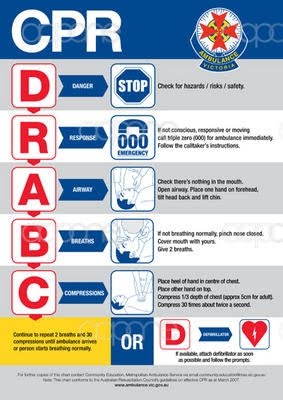
    BASIC FIRST AID


    What is First Aid?


    FIRST AID is the first assistance or treatment given for a sick or injured person (called casualty) before the arrival of an ambulance or qualified expert.

    Objectives of first aid…

    1...Save lives
    If unconscious keep the airway clear
    Make sure the casualty is breathing
    Stop any bleeding
    Treat other injuries in the right order


    2...Prevent further injuries
    Never move the casualty unless there is danger, to avoid further injury
    Comfort and reassure the casualty
    Give protection from the cold, exercise heat or wet conditions


    3...Obtain medical aid
    Ask someone to call an ambulance or doctor as soon as possible.
    Always stay with the victim until help arrives.


    Wash your hands before and after giving first aid and avoid getting blood on your hands or body especially if you have any open cuts or wounds.

    Fall-Protection Harnesses

    In construction , falls kill more than 300 construction workers every year and hurt thousands. Deadly falls on the job are from unprotected roof edges, roof and floor openings, scaffolds, ladders, structural steel, leading edges, open shafts, and more.

    Protect Yourself
    • Whenever fall protection is needed, make sure you have the right fall-protection system, know how it works, get trained to use it – and use it.
    • Where eliminating the hazard, guardrails, or safety nets won’t work, you need personal protective equipment (PPE) – fall-restraint systems, personal fall-arrest systems, or work positioning systems (on rebar). Restraint systems keep you from falling. Fall-arrest systems stop falls. You will need a full-body harness if you use one of these systems.
    • A full-body harness has straps worn around your trunk and thighs, with one or more D-rings in back to attach the harness to other parts of the system. If you fall, a properly fitted harness spreads the stopping force over your thighs, pelvis, chest, and shoulders.
    Choosing a Harness
    • Learn about the types of fall hazards on your job.
    • Choose the right type of fall protection for each type of fall hazard. Never use a body belt, seatonly harness, or chest-only harness for fall protection. Use a full-body harness instead.
    • You can use a harness with an anchorage, a lanyard, a retractable lifeline, a vertical lifeline, a travel rail, a horizontal lifeline, a fall arrester, and/or a shock absorber. A fall-arrest system should let you fall no more than 6 feet. A work-positioning device should let you fall 2 feet or less.
    • A registered professional engineer should design a fall protection system. A qualified person must supervise the setting up.
    • Make sure the harness fits you and is comfortable, to prevent body strain. You can get shoulder and back pads to reduce harness pressure. Full-body cross-chest harnesses are more comfortable for women and can reduce bruising when falls are stopped.
    Training
    • The employer must fit and train each worker for the equipment to be used.
    • A competent person must train workers at risk of falling about types of fall hazards, how to protect yourself, and other hazards and limitations in using fall protection.Training must cover all that can happen, like hanging in a harness and rescue. The trainer should tell workers about medical conditions that can be made worse by a fall in a harness.
    • If the worksite changes or the type of fall protection equipment is changed, workers using the equipment must be retrained.
    Steps to using harness


    So, safety is very important for protect yourself from accident happen such as fall from height. Using safety harness when working at the height place. If you follow SOP or Policy of the company, you can prevent any accident that can happen in the workplace. 

    Thats all . Safety First :)

    Dealing With Unsafe Behaviour? It's SUSA Laa..


    Welcome back to ' THE SHE SHOW ' !

    The Senior SHO :

    For this month, I'll be discussing on safe behaviour in workplace. Promoting safe behaviour at work is a critical part of the management of health and safety, because behaviour turns systems and procedures into reality. It's important for their welfare too.

    The Junior SHO :

    Safe Behaviour? Welfare?

    The Senior SHO :

    On their own, good systems do not ensure successful health and safety management, as the level of success is determined by how organizations ‘live’ their systems. So, unsafe behaviour can develop an OSH issue in the workplace.

    How are we going to solve this problem? It's SUSA !

    The Junior SHO :

    SUSA? What the heck is that? Is that 'susah'...? SUp SAwi..?

    The Senior SHO :

    Nope. SUSA is an acronym for Safe & UnSafe Acts discussions. It is one way of a systematic observation of working behaviour followed by discussion with employee, with the aim of preventing injuries, occupational illness and loss.

    The Junior SHO :

    How to implement SUSA?

    The Senior SHO :

    Easy. Just follow this steps..

    1. Stop and observe employee.

    2. Put employee at ease.

    3. Explain what you are doing and why.

    4. Ask what is the job and stages.

    5. Praise aspects of safe behaviour.

    6. Ask what is the worst accident that could happen and how.

    7. Question 'why' to any unsafe behaviour.

    8. Ask what correct action required.

    9. Achieve commitment to act.

    Just keep an open mind and treat them how you would like to be treated. It's simple as that.

    The Junior SHO :

    Thank you, sir. That teaches me a lot.. :)


    Sunday, November 27, 2011

    overloading can result in death!!!

    “Malaysia Boleh!!” This expression is appropriate to use when the Football Association of Malaysia (FAM) team beat the Indonesia in the final of the sea games.But do you know in Indonesia, ferry accident sank is normal to the public and we can see everyday people will using this ferry services. Ferries are a cheap and widespread means of transportation in Indonesia, 17,000 islands.

    Jakarta,June 22:- rescuers saved more than 240 people aboard a CROWDED Indonesian passenger ferry that sank Sunday in rough waters off Sumatra island, but 29 people have died and at least 17 others were missing, officials said. Rescuers say people found adrift are difficult to pull to safety because vessels can not get close enough in rough seas. Official say,Indonesian ferries have a poor safety record and overloading is a common practice.
    Overloading common on ferries:
    Indonesia has suffered several major ferry accident in recent year.As we know Indonesia is the third country with a most population in the world.234 million people are spread across 17,000 islands and are heavily dependent on a network of ships and boats, which have a poor safety record.In that statement we can see the negligence of the ferry company who allow the overloading.
    Poor in safety:
    The ferry also not have enough safety life jacket and safety boat.There all not enough to all the ferry passenger.And some bodies were found was not wearing life jacket.Beside that,they used old ferry on daily service.And the ferry also not have good maintenance.
    In my opinion the main factor that happen this accident is overloading.I think the government should prevent this negligence from the worst can be happen in Indonesia.I think Malaysia, especially “pulau pinang ferry service”also should take this as good lesson to prevent the an accident.